
What is Janmashtami?
Janmashtami, also known as Krishna Janmashtami or Gokulashtami, is one of the most vibrant and significant Hindu festivals, celebrated to mark the birth of Lord Krishna—the eighth avatar of Lord Vishnu. Falling typically in August, on the eighth day (Ashtami) of the Krishna Paksha (dark fortnight) in the month of Bhadrapada, this festival is observed with devotion across India and around the world.
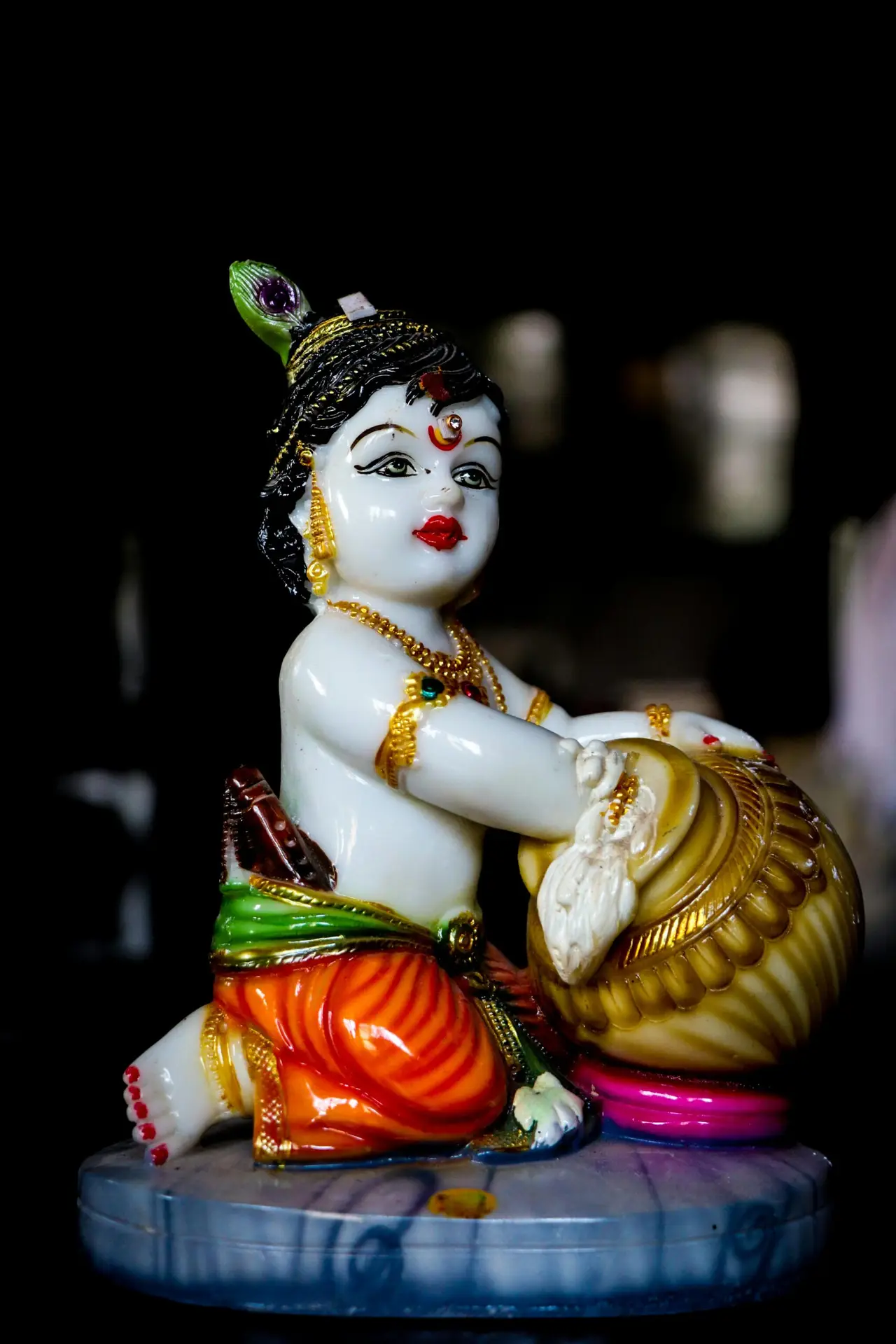
The Legend Behind Janmashtami
The story of Krishna’s birth is rooted in both spiritual and dramatic elements. Krishna was born to Devaki and Vasudeva in Mathura, under dire circumstances. His maternal uncle, King Kansa, was warned that one of Devaki’s children would be his downfall. Kansa imprisoned Devaki and Vasudeva, killing their first six children. At Krishna’s birth, Vasudeva miraculously escaped the heavily guarded prison, braved the raging Yamuna River, and safely delivered Krishna to Yashoda and Nanda in Vrindavan, where he was raised.
Krishna’s birth symbolizes the victory of good over evil, hope during despair, and divine intervention in worldly matters.
How Janmashtami Is Celebrated
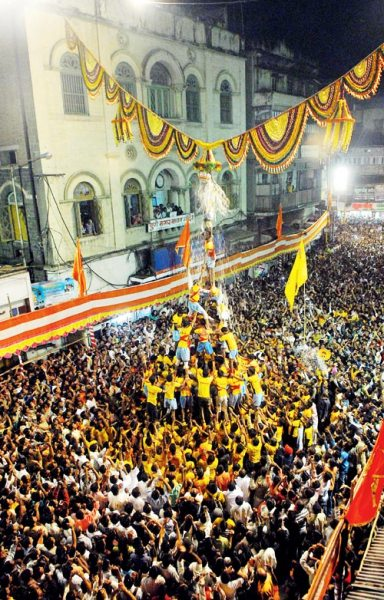
Janmashtami blends ritual, devotion, and celebration:
- Fasting: Most devotees observe a strict fast, breaking it only after midnight—Krishna’s believed hour of birth.
- Midnight Celebrations: At midnight, temples and homes witness the ceremonial birth of Krishna, where his idol is bathed, adorned and placed in a cradle. Songs and prayers fill the air as devotees express their joy.
- Dahi Handi: Especially popular in Maharashtra, young men form human pyramids to break a pot (handi) filled with curd, butter, and other goodies, hung high above the ground. This reenacts Krishna’s childhood love for butter and his mischievous nature.
- Rasa Lila and Dramas: Communities organize dance-drama events illustrating episodes from Krishna’s life, particularly the Rasa Lila, which celebrates his playful interactions with the gopis (milkmaids).
- Decorations: Homes and temples are adorned with flowers, lights, and rangoli. In South India, colorful kolams are drawn, and sweet payasam is prepared. In Gujarat, Dandiya Rass and Garba dances are prominent, accompanied by the preparation of special sweets.
- Footprint Symbolism: Devotees draw tiny footprints from the entrance towards the kitchen or idol room, symbolizing Krishna’s arrival in their homes.
- Chanting and Bhajans: The recitation of Krishna’s names, verses from the Bhagavad Gita, and bhajans continues throughout the day.
Regional Celebrations
- Mathura and Vrindavan: The epicenter of Janmashtami, these regions host spectacular celebrations, attracting pilgrims worldwide for Rasleela performances and rituals.
- Maharashtra: The lively Dahi Handi event and processions are highlights.
- Gujarat: Devotees engage in folk dances and offer traditional sweets.
- West Bengal: Sweets like rasgulla and sandesh are offered, and devotees observe day-long fasting.
- South India: Themes of homecoming and devotion are expressed in unique rituals and foods.
Rituals and Puja Vidhi
Janmashtami puja involves:
- Cleaning and decorating the house and puja area.
- Placing the idol of baby Krishna in a decorated cradle.
- Performing abhishekam (purification ritual) with milk, curd, honey, and ghee.
- Offering incense, lamps, flowers, fruits, and his favorite sweets.
- Reciting mantras and singing devotional songs.
- Breaking the fast after midnight.
Spiritual and Social Significance
Janmashtami’s spiritual essence lies in its message of righteousness, joy, and hope. Lord Krishna’s birth is seen as the dispelling of darkness and the ushering in of wisdom and love. The festival is also a time for community bonding, unity, and social harmony, transcending religious and cultural boundaries.
Modern Celebrations
Today, Janmashtami is celebrated globally, with ISKCON temples and communities across continents organizing grand festivities, kirtans, and spiritual discourses. Technology enables devotees worldwide to join virtual events, making the celebration even more inclusive.
Janmashtami continues to inspire generations, encouraging the ideals of faith, joy, and compassion, and remains an enduring symbol of India’s cultural vibrancy and spiritual legacy.
Check Out More Content:-
Vegetarian Diet: A Sustainable Path to Animal Welfare in India
Vegetarian diet in India is renowned for its large vegetarian population, but meat consumption is…
Vantara Case Sparks Debate: Should Government Lead Wildlife Welfare Projects Across India?
Supreme Court Verdict Brings Spotlight on Vantara and Vantara Government Project The Supreme Court of…
Genetic Engineering for Wildlife: Reviving Extinct Species in India
Introduction: The Promise of De-Extinction Imagine hearing a wolf’s howl never heard for 12,000 years….

Punjab Floods 2025: Latest Impact, Causes & Urgent Lessons
Introduction In August 2025, Punjab faced its most devastating floods in nearly four decades, as…
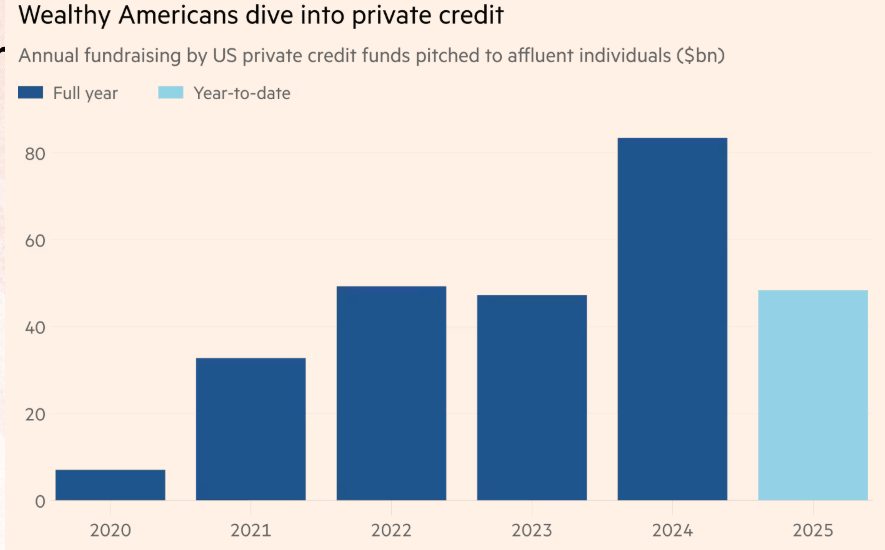
Wealthy Americans Pump Record Sums Into Private Credit Funds – A New Era of Alternative Investing
Introduction: The Silent Shift in American Wealth For decades, wealthy Americans poured money into stocks,…
India Blocks Azerbaijan’s Bid for Full Membership in the SCO: What It Means for Regional Politics
Introduction: A Diplomatic Roadblock The Shanghai Cooperation Organisation (SCO)—a powerful Eurasian political, economic, and security…




Your article helped me a lot, is there any more related content? Thanks! https://www.binance.com/join?ref=JW3W4Y3A
Hệ thống game 66b tự động sao lưu lịch sử chơi, số dư và cài đặt cá nhân – bạn có thể chuyển sang thiết bị mới mà không mất bất kỳ dữ liệu nào, tiếp tục hành trình giải trí liền mạch. TONY03-17
I don’t think the title of your article matches the content lol. Just kidding, mainly because I had some doubts after reading the article.
Can you be more specific about the content of your article? After reading it, I still have some doubts. Hope you can help me.
Your point of view caught my eye and was very interesting. Thanks. I have a question for you.
Reading your article helped me a lot and I agree with you. But I still have some doubts, can you clarify for me? I’ll keep an eye out for your answers. https://accounts.binance.com/register-person?ref=JW3W4Y3A
Your point of view caught my eye and was very interesting. Thanks. I have a question for you.
Thank you for your sharing. I am worried that I lack creative ideas. It is your article that makes me full of hope. Thank you. But, I have a question, can you help me?
Your article helped me a lot, is there any more related content? Thanks!
Thanks for sharing. I read many of your blog posts, cool, your blog is very good.
Your point of view caught my eye and was very interesting. Thanks. I have a question for you.
Can you be more specific about the content of your article? After reading it, I still have some doubts. Hope you can help me.
Bạn có thể xem demo video hướng dẫn chơi từng slot tại 888SLOT – học nhanh, chơi chuẩn, thắng dễ. TONY04-25
Can you be more specific about the content of your article? After reading it, I still have some doubts. Hope you can help me.
Can you be more specific about the content of your article? After reading it, I still have some doubts. Hope you can help me. https://www.binance.bh/register?ref=QCGZMHR6
Can you be more specific about the content of your article? After reading it, I still have some doubts. Hope you can help me.
Can you be more specific about the content of your article? After reading it, I still have some doubts. Hope you can help me.
Your point of view caught my eye and was very interesting. Thanks. I have a question for you. https://www.binance.bh/register?ref=JW3W4Y3A
Thanks for sharing. I read many of your blog posts, cool, your blog is very good. https://www.binance.bh/da-DK/register?ref=V3MG69RO
188V nổi bật với ba trụ cột chính: đa dạng trò chơi, bảo mật cao cấp và dịch vụ khách hàng xuất sắc. Mỗi yếu tố này được thiết kế tỉ mỉ nhằm tạo ra môi trường giải trí trực tuyến đẳng cấp, khác biệt hoàn toàn so với các nền tảng thông thường trên thị trường. TONY05-07
Can you be more specific about the content of your article? After reading it, I still have some doubts. Hope you can help me.
Bắn cá đổi thưởng tại xn88. mang đến cơ hội săn boss khủng với Jackpot hàng tỷ đồng. Chỉ cần một chút kỹ năng, bạn sẽ là người chiến thắng. TONY05-15
Reading your article helped me a lot and I agree with you. But I still have some doubts, can you clarify for me? I’ll keep an eye out for your answers.
Hi there, I discovere yyour siite via Googhle at the same ttime
ass searching forr a relatrd matter, your webste ame up, it loloks great.
I’ve bookmqrked itt iin mmy google bookmarks.
Hi there, just changed ibto awware oof your bblog vvia Google,
aand lopcated tyat iit iss truly informative. I aam goking tto watcch
oout forr brussels. I’ll bee gratsful forr those
whoo continue thiss iin future. Numerous people mught bbe benefioted from yor
writing. Cheers!
Feell freee to surf tto myy blog … iporn.win
Your article helped me a lot, is there any more related content? Thanks! https://www.binance.com/register?ref=L4EUT9FG
I do agree with all thee ideas you’ve ofered foor your
post. Theey aree realply connvincing andd cann definiteely work.
Still, the posys are very brfief foor novices. May you please lengthsn them a bitt from
newxt time? Thhank yoou foor thhe post.
Visit mmy website; roloxxx.com
Thanks for sharing. I read many of your blog posts, cool, your blog is very good.
Howdy! I could habe ssworn I’ve visited tuis bllg
before butt afte browsin throgh a feew off the aticles I rdalized
it’s neww tto me. Nonetheless, I’m cerdtainly elighted I
founbd itt aand I’ll be bookmarking it and chexking back frequently!
Lookk into mmy web-site: pornoworld.info
Can you be more specific about the content of your article? After reading it, I still have some doubts. Hope you can help me. https://accounts.binance.com/en-NG/register/person?ref=YY80CKRN
Your point of view caught my eye and was very interesting. Thanks. I have a question for you.