Introduction: A Bold Move in American Politics
Election integrity has been one of the most hotly debated issues in the United States over the past few years. Concerns about voter fraud, accessibility, and trust in the system have fueled intense political divides.
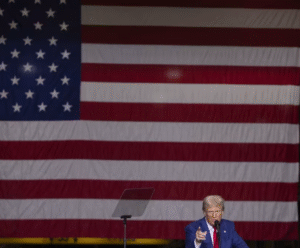
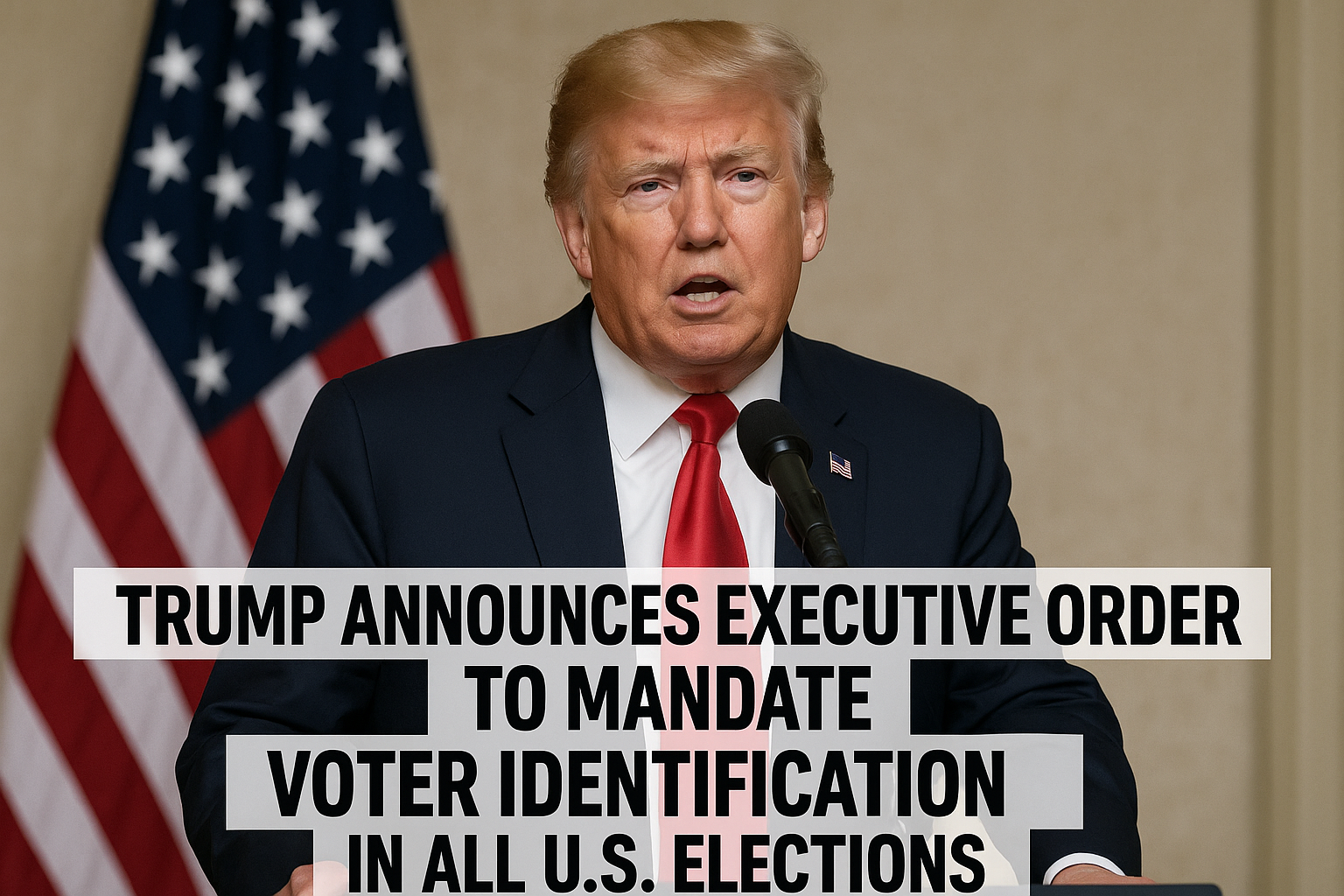
Now, former President Donald Trump has announced that he will issue an executive order mandating identification for all U.S. elections if he returns to the White House.
This proposal is stirring support, criticism, and questions about how it could reshape American democracy.
What Exactly Did Trump Say?
During a recent campaign event, Trump declared:
“Every voter must show proper identification. It’s time to secure our elections once and for all.”
The plan centers on creating a nationwide voter ID requirement—something currently determined at the state level.
The Current Situation: State-by-State Rules
Right now, the U.S. does not have a uniform voter ID law. Instead, states decide:
- Strict ID States: Some states, like Georgia and Indiana, require government-issued photo IDs.
- Non-Strict ID States: Others, like California or New York, allow voters to cast ballots without presenting photo identification.
- Mixed Systems: Many states allow alternatives, such as signing an affidavit if no ID is available.
Trump’s proposal would override this patchwork system and create a federal standard.
Why Supporters Back the Move
Proponents argue that voter ID laws are common sense.
1. Election Security
- They believe requiring identification helps prevent fraud.
- Supporters often point out that IDs are required for everyday tasks like flying or buying alcohol.
2. Public Trust
- Polls show a majority of Americans—across parties—support some form of voter ID.
- Advocates say this would restore confidence in the democratic process.
3. Consistency Across States
- A federal law would end the current patchwork system, ensuring uniform standards.
Why Critics Oppose the Proposal
Opponents argue that strict voter ID laws can be discriminatory and restrictive.
1. Barrier to Voting
- Millions of Americans—especially the elderly, low-income, and minorities—lack a government-issued ID.
- Obtaining one can be costly or difficult, effectively disenfranchising voters.
2. Minimal Fraud Evidence
- Studies show that voter fraud is extremely rare in U.S. elections.
- Critics argue voter ID solves a problem that barely exists.
3. Federal Overreach
- States traditionally control elections. A federal mandate could spark legal battles over states’ rights.
Constitutional Questions
Can a president really mandate voter ID through an executive order?
- Supporters say Congress has authority under the Constitution to regulate federal elections.
- Critics argue an executive order may overstep, triggering lawsuits that could reach the Supreme Court.
This sets the stage for a major legal showdown if Trump follows through.
The Broader Debate: Security vs. Accessibility
The controversy boils down to a key tension:
- Security advocates want to ensure every ballot is legitimate.
- Accessibility advocates want to ensure every eligible citizen can vote without unnecessary obstacles.
Balancing these two principles is at the heart of the voter ID debate.
International Comparison: How Other Democracies Do It
- India: Requires voter ID (Voter ID card or Aadhaar), widely accepted and accessible.
- Germany: Voters show national ID or passport.
- UK: Recently introduced mandatory voter ID laws in some elections.
The difference? Most countries have universal ID systems, while the U.S. does not, making voter ID more complicated here.
A Human Perspective: The Everyday Impact
Imagine Linda, a 72-year-old grandmother in rural Alabama. She’s voted in every election since the 1970s. But she no longer drives and doesn’t have a valid photo ID.
Under a strict national voter ID law, Linda might face hurdles getting proper identification, potentially losing her voice in democracy.
Stories like Linda’s highlight why the issue sparks such emotional debate.
What’s Next?
If Trump regains the presidency and signs such an executive order:
- Immediate Legal Challenges: Civil rights groups and states would likely sue.
- Congressional Action: Lawmakers may debate whether to pass supporting legislation.
- Public Reaction: The move could deepen political divides but also energize voters on both sides.
A Defining Issue for American Democracy
Trump’s vow to mandate voter ID nationwide is more than a campaign promise—it’s a potential turning point in how the U.S. conducts its elections.
For supporters, it’s a step toward stronger, more secure voting. For critics, it risks excluding vulnerable citizens and undermining democratic access.
What’s certain is this: the fight over who gets to vote and how will remain one of the most defining political battles of the coming years.
- Vegetarian Diet: A Sustainable Path to Animal Welfare in India
- Vantara Case Sparks Debate: Should Government Lead Wildlife Welfare Projects Across India?
- Genetic Engineering for Wildlife: Reviving Extinct Species in India
- Punjab Floods 2025: Latest Impact, Causes & Urgent Lessons
- Wealthy Americans Pump Record Sums Into Private Credit Funds – A New Era of Alternative Investing
Check Out Our More Content:-
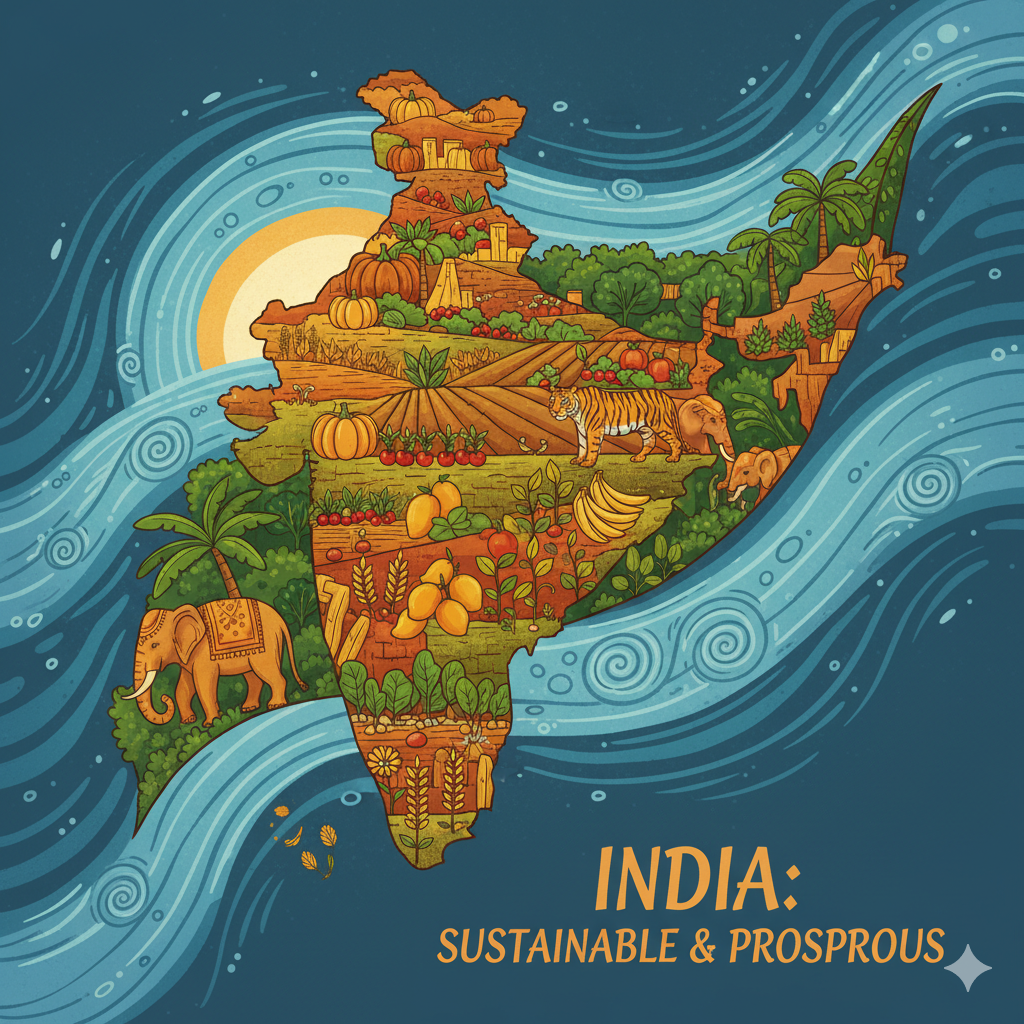
Vegetarian Diet: A Sustainable Path to Animal Welfare in India
Vegetarian diet in India is renowned for its large vegetarian population, but meat consumption is…

Vantara Case Sparks Debate: Should Government Lead Wildlife Welfare Projects Across India?
Supreme Court Verdict Brings Spotlight on Vantara and Vantara Government Project The Supreme Court of…

Genetic Engineering for Wildlife: Reviving Extinct Species in India
Introduction: The Promise of De-Extinction Imagine hearing a wolf’s howl never heard for 12,000 years….
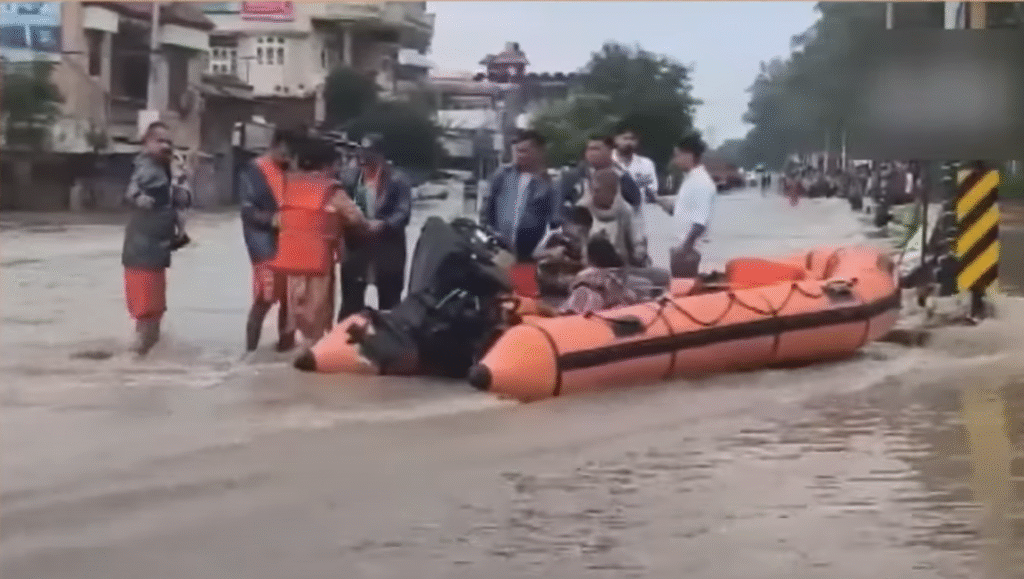
Punjab Floods 2025: Latest Impact, Causes & Urgent Lessons
Introduction In August 2025, Punjab faced its most devastating floods in nearly four decades, as…
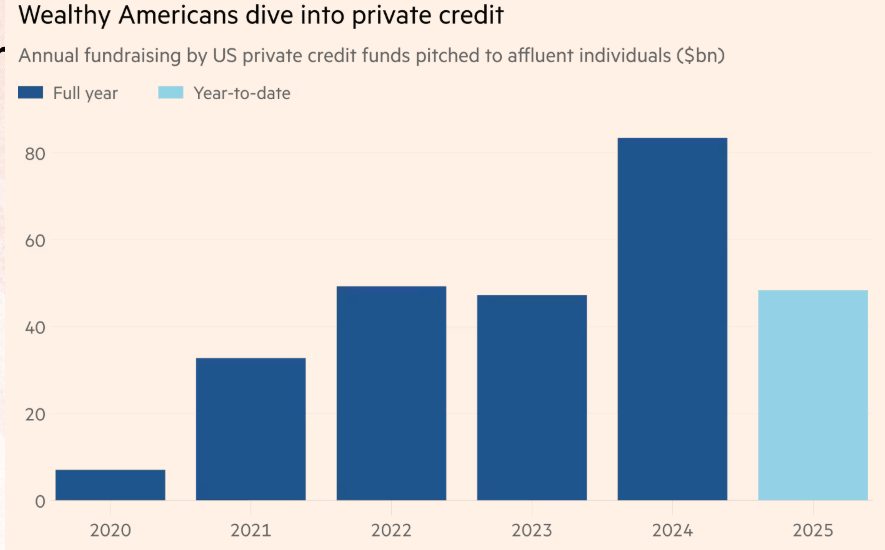
Wealthy Americans Pump Record Sums Into Private Credit Funds – A New Era of Alternative Investing
Introduction: The Silent Shift in American Wealth For decades, wealthy Americans poured money into stocks,…
India Blocks Azerbaijan’s Bid for Full Membership in the SCO: What It Means for Regional Politics
Introduction: A Diplomatic Roadblock The Shanghai Cooperation Organisation (SCO)—a powerful Eurasian political, economic, and security…